Intelligence Learns From an Incomplete Picture of Humanity
Every intelligent system learns from data, histories and assumptions that are incomplete. Prof. Sennay Ghebreab considers who is missing from the picture, who should be in the room before a system is built, and what African proverbs ask of AI.
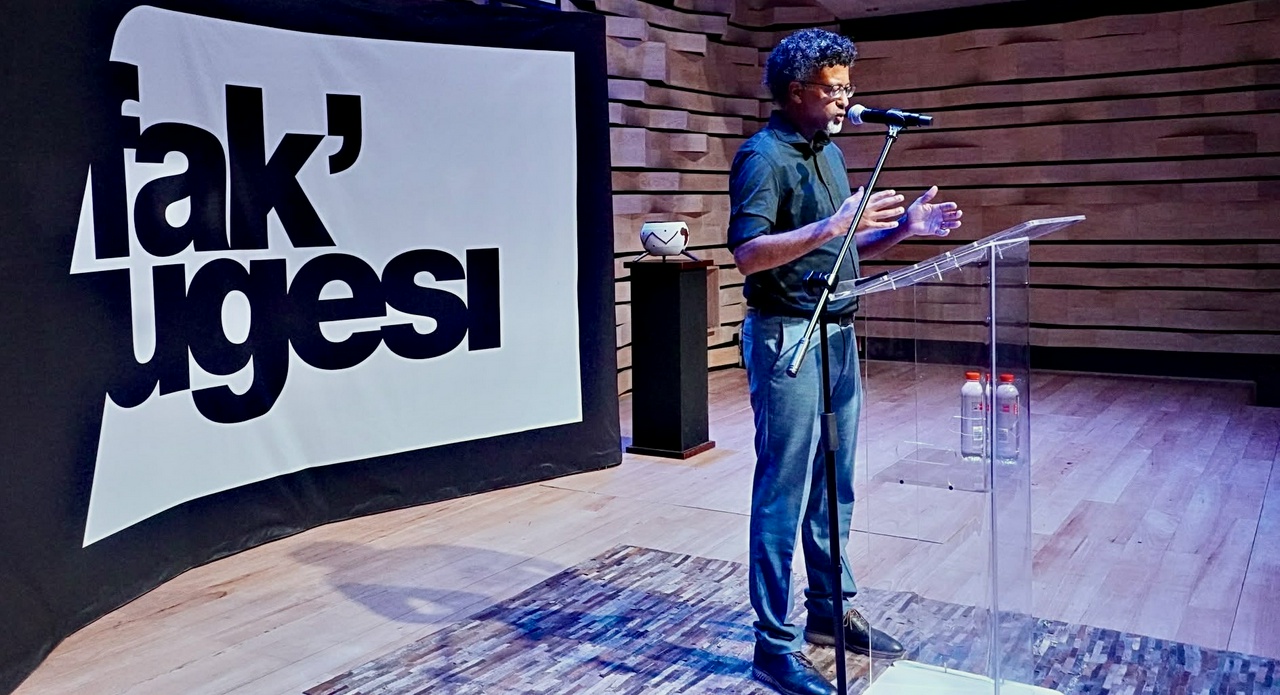
Sennay Ghebreab is a full professor of Socially-Intelligent AI at the University of Amsterdam (UvA), where he also serves as the program director of the Master Information Studies and the founder and scientific director of the Civic AI Lab. His current work focusses on harnessing AI for the betterment of everyday life and society, ensuring it is done fairly and inclusively. His work is rooted in a multigenerational family of African educators and innovators.
AJ. Every intelligent system learns from data, histories and assumptions that are incomplete. Who or what is missing from the picture, and how do you know?
SG. I distinguish between three levels of incompleteness. First, a system may have sufficient data – for example, millions of medical images – but lack the technical capacity to extract meaningful information from it. This requires a technical fix. Second, a system may lack the data needed to represent reality faithfully, for example, language models not exposed to African languages and oral traditions. This requires a social intervention: citizens and communities must question the system, identify who or what is missing, and help fill the gaps. Third, a system may be deliberately designed to acquire, concentrate or maintain political or economic power. A social media platform, for example, may prioritize engagement over wellbeing. This requires more than technical or social interventions; it calls for cross-sectoral collaboration and systemic change.
AJ. Where does an incomplete picture turn into a decision about a person’s life? Your group has worked on Amsterdam’s school allocation algorithm. What did that case show?
SG. Amsterdam’s school allocation algorithm is one of several Civic AI Lab use cases addressing socioeconomic inequality, in this case in education. It matches children to their preferred schools using a well-known algorithm based on Nobel Prize-winning work. Its appeal lies partly in being strategy-proof: parents and children cannot improve their chances by misrepresenting their preferences.
But this assumes that parents and children will try to game the system. Our research found that, when adequately informed about the risks of misreporting, they have little or no reason to do so. This incomplete understanding of their needs and behavior led to a suboptimal algorithm with real consequences: for years, children ended up in schools they did not want to attend. The lesson is that an algorithm can work exactly as designed and still produce undesirable outcomes when its underlying assumptions fail to reflect people’s realities.
AJ. The obvious answer is more data. But archives and museums earn trust by showing provenance, where an object came from and who handled it. Should an AI system have provenance too?
SG. If more data means better, more trustworthy data, then yes. Provenance in AI is essential to understanding where data comes from, how it has been collected and processed, and whose knowledge it represents. But data provenance is about more than improving AI. It is also about recognizing the citizens and communities whose knowledge and data make scientific, technological and social developments possible. Too often, science and society have extracted knowledge without giving proper credit, ownership or agency to those who contributed it.
As AI expands across every sector and around the world, data provenance offers an opportunity to change that: from extraction to recognition, and from exploitation to shared ownership. It can help ensure that the people and communities behind the data are not merely resources for AI, but recognized contributors with a say in how their knowledge is used.
AJ. Your group’s line is that AI should be working for people, instead of people working for AI. What changes in practice when the community is in the room before the system is built?
SG. I believe science and development of any sort – including AI – should follow a cycle of reflection, introspection, imagination and transformation, and then begin again. Citizens and communities should participate in every step of this cycle as equal partners, not passive recipients of systems and markets designed for them or applied to them. This brings different perspectives to the table, challenges assumptions and improves the quality of every step.
Yet involving citizens and communities is generally seen as undesirable because it tends to slow things down. But as a Kenyan proverb goes, “Hurry, hurry has no blessing.” Rushing may save time in the short term but lead to poor outcomes in the long term. If we want AI to work for people, we must take the time to reflect, listen and imagine together before we transform.
AJ. This conversation happens in Johannesburg, at a festival asking who gets to define intelligence. What does an African setting change about what counts as incomplete?
SG. In recent years, I have increasingly drawn on African proverbs to clarify and challenge how AI is designed, developed and deployed. Three other examples I regularly use in my lectures and conversations are the Nigerian proverb, “Until the lion learns how to write, every story will glorify the hunter”; the Ghanaian proverb, “Wisdom is like a baobab tree; no one individual can embrace it”; and an Ethiopian proverb from my birth country, “You cannot wake someone who is pretending to be asleep.”
Only recently did I realize how these proverbs speak to the aforementioned levels of incompleteness. I seem to be increasingly turning to Africa’s deep, timeless and often globally overlooked wisdom to imagine different pathways for AI. By resisting the frantic AI races shaped elsewhere and drawing on its own histories, knowledge systems and communal traditions, Africa can help shift the focus from individual power to collective wisdom, and from competition to compassion for people and planet.
AJ. What is the one question a citizen, a funder or a ministry should ask of any AI system before trusting it?
SG. The central question of my research group Socially Intelligent Artificial Systems (SIAS), including the Civic AI Lab is: How can we develop AI that helps move us from the Cycle of Oppression to the Cycle of Liberation?
These cycles draw on the work of Brazilian educator and thinker Paulo Freire, author of the seminal book Pedagogy of the Oppressed. The Cycle of Oppression reproduces a status quo driven by power, profit, competition, greed and fear. The Cycle of Liberation points towards a more conscious society grounded in equity, dignity and compassion.
Too often, AI reinforces oppression rather than enabling liberation. The central question of my research group, challenges citizens, funders, companies and ministries to look beyond technical effectiveness or economic profit. What kind of society does this system help create, and whose interests does it serve? The discomfort this question provokes is important. It may be the beginning of the reflection and introspection needed for genuine transformation.
WHAT HAPPENS WHEN INTELLIGENCE LEARNS FROM AN INCOMPLETE PICTURE OF HUMANITY? 15 October 2026, Fak'ugesi Digital & Innovation Festival: fakugesi.co.za
Ashraf Johaardien is the Writer in Residence at the Fak’ugesi African Digital & Innovation Festival 2026. His views are his own and do not represent those of the festival or its partners.
8 October 2026